October 6th, 2026 • Written and Edited by Alexandr Jirgens
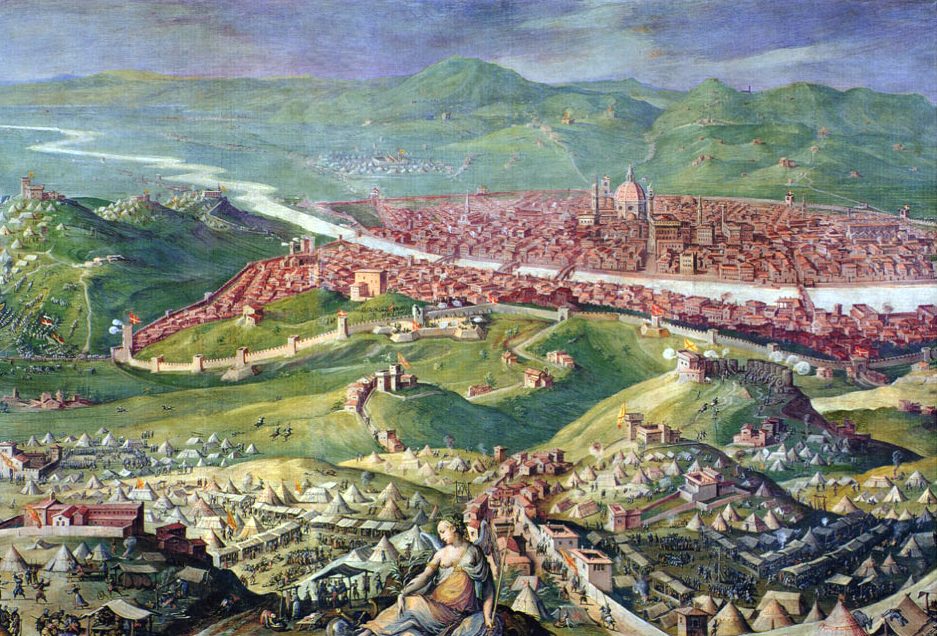
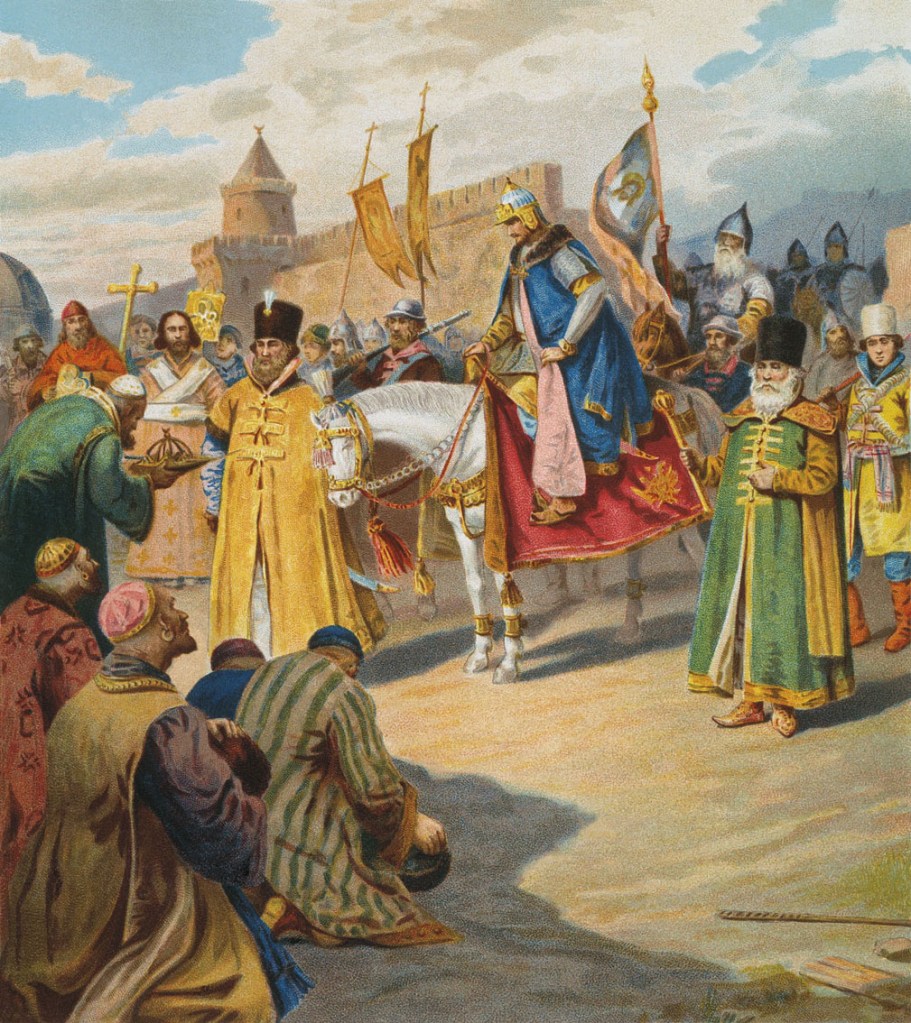
The Siege of Florence 1529-1530 (left) and Ivan IV under the walls of Kazan (right).
The period between 1462 and 1583 is often treated separately in discussions of the Italian Renaissance and the consolidation of Muscovy. The current historiography rarely, if ever, places these regions in sustained dialogue, despite the striking parallels between their political landscapes. This separation obscures important insight. When examined comparatively, the Italian peninsula and the Russian lands reveal structural similarities in fragmentation, external pressure, and geopolitical competition. Far from being entirely divergent in their early trajectories, both regions began this period under remarkably parallel political conditions.
War was common in both regions and the pace that military technology and tactics evolved was profound. Both regions would learn and adapt to the evolution of warfare, but at their own pace and needs. By the end of our period, warfare had drastically changed the political landscape and structures of both regions. Princes and popes rose and fell, and Tsars emerged in the east. Yet the outcomes in both regions would politically diverge. Ultimately, Muscovy’s service based military organization and dynastic religious legitimacy fueled territorial expansion and administrative consolidation, while Italy’s contract warfare and heated rivalries between states postponed unification despite both having similar technological and tactical developments.
Parallel Political Landscapes Under External Pressure
Both Italy and the Russian lands entered the late fifteenth century under fragmented political systems. In Italy the peninsula was divided among republics, principalities, and an ecclesiastical state including Venice, Florence, Milan, Naples, and the Papal States. Similarly, the Russian lands contained competing principalities and republics such as Muscovy, Novgorod, Pskov, Tver, and Ryazan.
Among these states in Italy, Venice was arguably the most formidable in both economic and military terms. By the late fifteenth century, it had established itself not only as a dominant maritime power but also as a substantial territorial state through its expansion across the Terraferma in the northeastern portion of the peninsula. Venetian expansion alarmed neighboring states, which frequently sought alliances to counterbalance its influence.[1] Muscovy, played a comparable role in the Russian lands. By the late fifteenth century it had emerged as the most powerful principality in the region. Other Rus principalities became wary of this expansion and began to seek alliances amongst themselves or with external powers to contain Muscovite influence.
Both regions also contained important republican states. In Italy, Florence, though militarily capable, was primarily an economic and cultural center during the earlier decades of the period. The Medici banking dynasty accumulated wealth through extensive financial networks, including loans to the papacy. Florence became a leading center of Renaissance culture, and its public works and patronage reinforced its prestige even when its political stability was less secure. A roughly comparable republic in the Russian lands was Novgorod. Like Florence, Novgorod served as a cultural and economic hub and had extensive trading networks across the Baltic region. Pskov was also a Republic in the Russian lands, though it was considerably smaller in terms of size and influence compared to both Florence and Novgorod.
The principalities of Milan and Naples also played decisive roles within the Italian political landscape. Milan, ruled by the Sforza family, exercised centralized authority and maintained a persistent rivalry with Venice. Naples, governed by the Crown of Aragon, represented Spanish dynastic influence on the peninsula and often intersected with papal concerns. These principalities can be compared with those of Tver and Ryazan in the Russian lands, which also competed with Muscovy for regional dominance. It was by no means pre-determined that Muscovy would emerge dominant among them,[2] just as it was unclear that it would be Savoy who would unify Italy in the nineteenth century. However, these Russian polities shared a common dynastic heritage tracing back to the Rurikid dynasty and the Kievan Rus state founded in the late ninth century. Traditionally, the title of Grand Prince of Kiev passed to the most senior male in the dynasty. However, the Mongol invasion fractured this order.
The Papal States, occupying the center of Italy, presented a unique combination of secular and ecclesiastical authority. Under ambitious families such as the Borgias and the della Rovere, the papacy sought to consolidate territorial control while asserting spiritual supremacy. The Russian lands had no direct equivalent to such a state. Nevertheless, church power was starting to accumulate there as well, especially after the fall of Constantinople in 1453, which had previously served as the center of Orthodox Christianity.
Yet neither the Italian nor the Russian states operated in isolation. External powers exerted significant influence on both political landscapes. France, Spain, and the Holy Roman Empire intervened frequently in Italian affairs, often at the invitation of Italian princes seeking advantage over rivals.[3] The emperor maintained symbolic and political ties to Rome, where papal approval was sought for imperial coronation.[4] A somewhat comparable dynamic existed in the Russian lands under Mongol Rule. The Rus principalities became subject to the Golden Horde, and princely authority was reshaped under Mongol suzerainty. The Horde possessed the authority to grant the title of Grand Prince, transforming internal succession into a competition for external recognition. This external overlordship profoundly altered the political landscape and Rus princes competed for favor with the Horde.
The Italian Wars from 1494 to 1559 institutionalized foreign intervention and culminated in Spanish and Habsburg dominance over Naples and Milan, territories long contested by France. Throughout these wars, Italian states shifted alliances pragmatically, aligning with France or Spain as circumstances required. Similar external pressures shaped the Russian lands. The Grand Duchy of Lithuania extended influence into western Rus territories, including Smolensk and Chernigov, at times incorporating them directly.[5] Also the Livonian Order, an autonomous branch of the Teutonic Order, clashed repeatedly with Novgorod and Pskov, motivated largely by commercial and strategic ambitions rather than dynastic claims. These pressures eventually culminated in the Livonian War from 1558 to 1583.
Thus, by the mid fifteenth century, both Italy and the Russian lands were characterized by political fragmentation, dynastic rivalry, and external intervention. Neither region possessed a predetermined hegemon. Both were arenas of internal competition shaped by foreign influence. Warfare was constant in both regions, and it would profoundly shape their political and military trajectories, largely based on the evolution of their state’s political structure and organization of war.
Political Structure and the Organization of War
There has been much discussion on how political structure impacts the way a particular state is organized for war.[6] This is certainly true for both Muscovy and the Italian states, and it is here that the two regions contrast starkly. The classic belief regarding the political structure of Muscovy, and eventually the Tsardom of Russia under Ivan IV, is that it was a fully centralized autocracy; however, this interpretation has been heavily disputed.[7] By contrast, the Italian states varied widely in political structure, yet the manner in which they conducted warfare against each other was often remarkably similar.
Muscovy’s military organization rested upon a political structure that had largely taken shape before Ivan III became Grand Prince in 1463, particularly through the dynastic civil war under his father Vasili II. Through this conflict, Vasili was able to advance the process of vertical succession, replacing the older lateral system in which the most senior dynast claimed authority. This shift was further solidified by the Khan’s authentication of Vasili II’s right to the title of Grand Prince.[8] In this sense, the Horde continued to function as an external arbiter among the Rus’ princes, not unlike the role foreign powers played in Italian disputes, albeit often with greater autonomy in the Italian case.
Ivan III was therefore the beneficiary of an increasingly consolidated form of authority, which he used to secure dominance over neighboring principalities that his father had already begun to subdue. Central to this was the implementation of the pomestie system. Under this system, newly acquired lands were distributed to nobles, but only on the condition of service to the Grand Prince, thereby creating the mechanism for what became virtually mandatory military service. Many scholars agree that this system strengthened Ivan III’s control over military resources and facilitated further territorial expansion. Even as Ivan III adopted the title of Tsar and later when Ivan IV formalized it, these rulers still needed to negotiate with their nobility to govern effectively.[9] Maintaining strong relations with the boyars remained essential, particularly for military campaigns, as they were expected to provide and maintain their own retinues.[10] While territorial expansion initially helped sustain this service system, by the reign of Ivan IV it became increasingly difficult to find sufficient land for distribution to an expanding service class. Continuous campaigning also strained nobles who were still responsible for managing their estates.[11]
Under Ivan IV, Muscovy’s political structure began to evolve further in response to military demands. With domestic rivals such as Tver, Novgorod, Ryazan, and Pskov annexed through the successes of Ivan III and Vasili III, Ivan IV was able to direct Muscovy’s war machine outward. To support expansion and increase troop numbers, the state intensified regulation of its pomest’e cavalry while also developing contract servicemen, most notably musketeers. These contract forces eventually made up roughly one-third of Muscovite forces and were accompanied by a growing presence of foreign military advisers and specialists.[12] Beyond musketeers, contract servicemen included sappers, miners, Cossacks, and artillery gunners. Their expense, compared to service-based cavalry, necessitated expanded administrative oversight. The creation of the Musketeer Chancellery in 1577, which implemented a “musketeer tax” levied on productive agricultural land, illustrates this growing bureaucratic capacity.[13] In total, the establishment of roughly twelve chancelleries demonstrates increasing political consolidation over the army.[14] There was also another group of soldiers called pososhnyye which were conscripted labor soldiers drawn from the tax paying population, but were mainly used in support roles like logistics and engineering. By the late sixteenth century, this combined military organization of service and contractor troops enlarged the military force to roughly 110,000 men.[15]
The Italian peninsula, much like the Russian lands prior to Muscovy’s rise, was politically fragmented, and this diversity shaped military organization. Despite their differing political forms, most Italian states structured warfare around contracted forces through the condotta system. Some regimes were perceived as more efficient than others. Venice, for example, was often regarded as better organized than Florence in its capacity to execute the condotta system.[16] In Venice, although the Doge was the symbolic head of state, strategic military decisions rested largely with the Senate, which acted as the central policymaking body. Tactical authority was increasingly delegated to commanders in the field, while the Council of Ten oversaw security and intelligence matters.[17]
Florence, by contrast, struggled in the early phases of the Italian Wars to organize an army under effective leadership. This difficulty may have stemmed from its preference for equity over efficiency in appointing officials, with administrative roles often assigned by lot among the ruling class. Combined with a deep suspicion of soldiers, this system contributed to an erratic military administration.[18] Nevertheless, Florence demonstrated moments of effectiveness, particularly through its employment of the Black Band company founded by Giovanni de’ Medici. During operations linked to the League of Cognac, these forces earned respect from French leadership and enhanced troop morale by reliably appearing at full strength, unlike some condottieri who delivered only a fraction of their promised forces[19]
Although Machiavelli famously criticized mercenaries as self-interested and unreliable, many historians now argue that the condotta system endured because it was both effective and efficient.[20] This reliance on contracted forces did not preclude the development of permanent militias. Venice was among the earlier states to establish such forces due to prolonged defensive commitments, and Milan and Florence gradually followed suit, though it would take considerable time to fully replace the contractor system.
Florence provides a particularly revealing example. While the republic initially relied heavily on the condotta system, it also sought to cultivate a more citizen-based military aligned with its humanist ideals. Ironically, it was Cosimo de’ Medici, who became Grand Duke after the Republic’s fall during the siege of Florence (1529–30), who introduced a more efficient and prestigious military organization. By the Siege of Siena (1554–55), roughly half of his army consisted of militia forces.[21] Cosimo also embodied a more “unheroic” model of leadership, directing military affairs from administrative centers rather than from the battlefield, in contrast to figures such as Cesare Borgia or Pope Julius II, who personally led troops in earlier campaigns.[22] By the later phases of the Italian Wars, expectations of princely leadership were shifting as states became more centralized and warfare became increasingly dangerous.
Republican systems were not unique to Italy, as we have already mentioned both Pskov and Novgorod were republics in the Russian lands. Both were administered through the veche, a popular assembly dominated by the boyar class and presided over by an elected prince. Though its military organization was the same as Muscovy as it largely consisted of pomest’e cavalry. By the 15th century however, Novgorod became increasingly dependent on neighboring principalities for defense, including Muscovy and Lithuania. The boyar factions within the veche were divided between supporters of these rival powers, which eventually led to the republic’s ruin. Ivan III used their flirtation with Lithuania as a pretext for conquest, and they were finally annexed in 1478.[23] Again, as with Florence prior to Cosimo’s reforms, Novgorod could perhaps have benefited had it adopted a more centralized administration during this period, allowing it to better defend itself against external threats or consolidate its own position in the region.
The Papal States are often mentioned only in passing, typically in diplomatic contexts during the Italian Wars, and comparatively few works examine their military organization in depth.[24] Yet their political and military structure provides an important point of comparison with Muscovy. Both states drew upon religious authority in the expansion of state power, but with markedly different outcomes. While Muscovy leveraged Orthodoxy to reinforce territorial consolidation, the Papacy’s dual identity as both a secular prince and spiritual authority ultimately constrained its ability to do the same.
During this period, the Papal States possessed a sophisticated administrative structure, particularly through institutions such as the Rota and Apostolic Camera. Under Pope Alexander VI and his son Cesare Borgia, papal authority was concentrated over the Romagna, while the size and influence of the papal army expanded to unprecedented levels through effective management of codottiere, laying the groundwork for Pope Julius II to further consolidate papal control.[25] The Papal States are especially notable due to their dual nature of secular and ecclesiastical authority, a tension that was reflected in the means by which military expansion was financed. Alongside traditional secular revenue sources such as taxation and income from the Tolfa alum mines, the papacy relied upon spiritual instruments of finance, including cardinal appointments, crusade bulls, and Jubilee years. Cesare’s military campaigns to assert direct control over the Romagna also expanded papal fiscal capacity, as newly subdued towns were incorporated into the Apostolic Camera, the central financial administration of the papacy. The military ambitions of both Alexander VI and Julius II to assert more direct authority over the Romagna required enormous expenditure. Alexander spent 63,000 ducats on artillery alone, in addition to substantial fortification upgrades. In this sense, the Papal States can plausibly be described as a fiscal-military state.[26]
Yet it was precisely this increasing reliance on secular military expansion that limited further territorial consolidation. While Italian rulers often viewed the pope as a secular prince, many European leaders continued to judge papal conduct according to ecclesiastical norms. Cesare Borgia’s campaigns and Julius II’s personal leadership in battle were viewed as extraordinary and at times inappropriate by other secular rulers.[27] Moreover, the institutional structure of papal authority imposed doctrinal constraints on expansion. Territorial acquisition was restrained by Cesare’s title of General of the Church, a distinction unique to the Papal States, as well as by legal limitations that prevented the army from extending dominion beyond the borders of the Romagna.[28]
Muscovy employed religious authority in a markedly different manner. Rather than allowing ecclesiastical institutions to wield independent military influence, the Grand Princes asserted control over the Orthodox Church and prohibited the patriarch from exercising military power. Unlike the papacy in western Europe, the Orthodox Church in Muscovy did not function as a rival political actor. Instead, it operated as a parallel institution reinforcing princely authority. Papal diplomacy nonetheless played a role in enhancing Muscovy’s international prestige through the arrangement of Ivan III’s marriage to Sophia Palaiologina, the last Byzantine princess. Following this union, Ivan began to employ Byzantine imperial symbolism, including the title of Tsar and the adoption of ceremonial and visual traditions associated with imperial authority such as the double headed eagle.[29] The Orthodox Church proved instrumental in consolidating princely legitimacy, particularly through the development of the “Third Rome” doctrine, which cast Muscovy as the protector of Orthodoxy.[30] Secular and ecclesiastical authority thus operated in tandem. Ivan IV framed the conquests of Kazan (1552) and Astrakhan (1556) in religious terms and these victories were celebrated jointly by church and state, exemplified by the construction of St. Basil’s Cathedral to commemorate the capture of Kazan.[31]
In this respect, Muscovy’s relationship with the Orthodox Church facilitated territorial consolidation, while the papacy’s dual identity as both spiritual authority and secular prince ultimately constrained its own expansion. Though papal military power and administrative centralization did increase during this period, these gains were often temporary. The elective nature of the papacy frequently overturned the secular ambitions of individual pontiffs and their families, preventing sustained territorial consolidation. Moreover, by the later part of our period, the spiritual authority of the Church itself was fracturing under the pressures of the Reformation. This stood in sharp contrast to developments in the Russian lands, where ecclesiastical and secular power increasingly reinforced one another, strengthening both political legitimacy, centralization and military expansion.
In summary, while Muscovy and the Italian states began the period with distinct political structures and military systems, service-based organization in Muscovy and contract-based forces in Italy, both experienced gradual change. Muscovy expanded its use of permanent contract servicemen such as the streltsy, while Italian states increasingly developed militias alongside traditional condottieri. These developments raised the financial and administrative costs of warfare and encouraged greater political consolidation. By the end of the period, certain Italian states, such as the Duchy of Florence, began to resemble Muscovy more closely in their reliance on permanent forces and centralized oversight. Prolonged warfare thus reshaped political and military organization incrementally rather than abruptly. Also, as we have shown, church power aided the centralization of the political structure in the Russian lands, while church secular power was eroding the spiritual authority of the catholic church due to its political and military centralization. We must now consider how both Muscovy and the Italian states adapted to evolving technologies and tactics of warfare during this period, and how these developments may have further contributed to these gradual transformations.
Technology and Tactics
Early literature on the military revolution placed heavy emphasis on technological innovation and the tactical changes it produced. Firearms and fortifications were often highlighted as the primary drivers of military transformation in Europe before being exported elsewhere.[32] This interpretation has since been heavily criticized for technological determinism and European centralism. Russia, in particular, has often been portrayed as backward in discussions of firearms and tactics, though much of the literature treats Muscovy and Western Europe in isolation from one another. When examined comparatively however, the similarities and divergences between warfare in Renaissance Italy and Muscovy become more apparent. Technology alone cannot explain military change, but it does illuminate how evolving tactical demands compelled states to reorganize their military structures.
The introduction of gunpowder and firearms significantly influenced warfare in both regions, though each followed its own trajectory in implementing these technologies. Gunpowder was used in the Russian lands as early as 1383, while similar technologies were gradually developing across Western Europe during the fourteenth and early fifteenth centuries.[33] Even if firearms were not employed as extensively in Muscovy as in Italy during our period, they nonetheless played an important role in Muscovy’s expansion and military transformation.
Although discussions of gunpowder often begin with Muscovy itself, other principalities such as Tver were important early producers and exporters of this technology. Muscovy benefited from these developments and moved quickly to institutionalize production, establishing the Porokhovyi Dvor (1494) gunpowder works and later the Pushechnyi Dvor arsenal (1547). The adoption of innovations introduced by the Italian Aristotel Fioravante, including bronze casting techniques, as well as the use of trunnions, gun carriages, and iron cannonballs, demonstrates Muscovy’s openness to technological exchange.[34] Claims that Muscovy was technologically late are therefore overstated. Ivan III’s effective use of artillery in the annexations of Novgorod (1478) and Tver (1485) predates France’s intervention in Italy by over a decade and challenges contemporary assumptions about Western superiority in artillery effectiveness, which has already been deemed as not as effective as once thought.[35]
While artillery development was broadly comparable between the Italian states and Muscovy, the widespread adoption of handheld firearms was more pronounced in Italy. Italian armies increasingly relied on arquebusiers as a core infantry component. The Black Band company formed by Giovanni de’ Medici, for instance, fielded approximately 3,300 troops with a substantial proportion of arquebusiers, representing one of the earliest proto-regimental formations in Italy.[36] As condottieri recognized the limitations of firearms when used alone, combined-arms tactics became essential. The integration of Swiss-style pike formations alongside arquebusiers marked the emergence of the pike-and-shot system. Pikes protected vulnerable firearm troops from cavalry charges, while firearms provided offensive and defensive capability. The Italian Wars served as a testing ground for these innovations, and by the mid- sixteenth century, success depended less on individual technologies than on their effective combination.[37] This shift encouraged a move away from the pursuit of decisive offensive engagements toward more flexible defensive strategies. The Black Bands, for example, employed maneuver and sustained fire to disrupt enemy pike formations through a tactic described as stalling where they would pepper pike formations with firepower and withdraw.[38] Although the same type of firearms, existed in both Russia and Italy, their tactical employment often differed considerably. Geography played an important role in shaping these differences. Warfare in Italy unfolded within a dense network of fortified cities and relatively short operational distances, encouraging the development of infantry centered combined-arms systems. By contrast, Muscovy operated across vast and sparsely populated territories and faced nomadic and semi-nomadic enemies on the steppe frontier. These conditions favored greater reliance on mobility and cavalry support when integrating firearms into Muscovite military practice.
Arquebuses appeared in the Russian lands by 1480, however infantry firearm units became more prominent during the later years of Vasili III and throughout Ivan IV’s reign. On the open plains of the steppe, firearm infantry were especially vulnerable, necessitating tactical adaptations similar in principle, though different in form, to those seen in Italy. Muscovy continued to rely heavily on pomestie cavalry, which could function protectively in conjunction with infantry forces. This system was complemented by the deployment of mobile defensive structures known as the gulia gorod, first recorded in 1522.[39] The formation of the strel’tsy under Ivan IV in 1550 marked the emergence of a permanent infantry force equipped primarily with arquebuses alongside berdysh axes and sabers. Like the Venetian militia, these troops were salaried and uniformed, and by the late sixteenth century numbered between 20,000 and 25,000.[40] However, in addition to being employed as musketeers, strel’tsy took on civic roles such as firefighting in the capital, a role that condottieri were never tasked with. [41]
The growing importance of infantry in both Italy and Muscovy had significant administrative implications. Maintaining larger, more permanent forces increased the financial burdens of warfare. While contractors remained important in both regions, prolonged conflict and the need to garrison expanding fortification systems encouraged the development of standing forces and more centralized administrative structures.[42]
The development of improved fortifications in both Italy and Muscovy not only altered the conduct of warfare but also imposed significant financial demands that contributed to increased state centralization. In Italy, the evolution of fortification design, particularly the trace italienne, was not the product of sudden genius but a gradual response to artillery warfare.[43] Its defining features included triangular bastions designed to provide flanking fire and walls constructed to withstand artillery bombardment more effectively than earlier medieval designs. These innovations emerged directly from the need to counter increasingly effective field artillery. Such fortifications were specifically engineered to integrate firearms into defensive systems. Walls were mounted with lighter artillery pieces such as the moschetto, commonly used in Florence, typically wall-mounted, breechloading, and swivel-based.[44] As a result, sieges became the dominant form of warfare in the latter half of the Italian Wars. Assaulting armies found it increasingly difficult to achieve rapid success, and major sieges, such as Pisa (1496), Naples (1528), and Siena (1554), required prolonged investment and sustained logistical commitment.[45] Compounding these difficulties was the widespread use of earthworks by both attackers and defenders. During the siege of Pisa, earthworks proved effective in mitigating artillery fire, while Siena constructed extensive lines of earthworks and redoubts to impede invading forces.[46] Earthworks were likewise used extensively in the Russian lands and proved effective in the capture of Smolensk.[47] It has been suggested that northern regions favored earthworks over masonry largely due to cost considerations.[48]
Italian engineers were instrumental in transmitting these developments to Muscovy, by figures already mentioned such as Aristotel Fioravante, demonstrating Muscovy’s willingness to adopt and adapt new techniques rather than resist them.[49] Muscovy would go on to construct the largest fortification complexes in Europe at Smolensk between 1595 and 1602.[50]All this indicates that Muscovy understood the challenges posed by modern siege warfare well before the Livonian War, even though that conflict is often cited as evidence of Muscovy’s difficulty in overcoming stone fortresses. Although Muscovy faced setbacks in Livonia, it had earlier succeeded in capturing major fortified centers during the war and also found success even earlier in its wars against Lithuania by taking Smolensk.[51] Defeat in Livonia can therefore be attributed less to technological inferiority and more to strategic limitations, including the absence of a navy capable of aiding its army when taking fortified ports, as well as internal instability caused by Ivan IV’s oprichnina and simultaneous conflicts against the khanates.[52]
Overall, fortification development in Italy and Muscovy progressed in broadly parallel fashion, aided by early technological exchange. Muscovy rapidly established formidable defensive works and expanded southern defensive lines. The financial burden of constructing and maintaining such fortifications demanded greater administrative coordination and fiscal extraction.[53] While fortifications were often more cost-effective than sustaining large standing garrisons or fleets, the tax burden they imposed frequently generated social strain. Ultimately, however, even the most advanced fortifications depended upon the resolve and will of their defenders, as morale and leadership often proved decisive in prolonged sieges.[54]
Lastly, we must mention how the role of cavalry was impacted by the development of these new technologies. In Italy and much of Western Europe, heavy cavalry had traditionally dominated the battlefield prior to the widespread adoption of firearms, though the Italian Wars increasingly exposed its limitations, but there were still some successes for heavy cavalry as seen at the battle of Ravenna.[55] Light cavalry gradually assumed greater importance in adapting to the new tactical environment. Venice famously employed eastern cavalry units known as stradioti, often recruited from the Balkans.[56] The Spanish utilized light horsemen called jinetes, whose tactics derived from earlier conflicts with the Moors.[57] In the age of gunpowder, light cavalry proved valuable for disrupting supply and communication lines and for supporting infantry formations. Giovanni de’ Medici incorporated stradioti into the Black Bands, and the consequences of insufficient light cavalry were evident during the siege of Naples, where the League of Cognac lacked adequate light mounted forces to sever supply and communication lines effectively.[58] Even so, light cavalry in Italy generally remained confined to supporting roles alongside infantry and heavy cavalry, which continued to dominate battlefield prestige.
In the Russian lands however, light cavalry was not an innovation of the gunpowder age but often functioned as the primary strategic arm of warfare. This was due to a longstanding military necessity shaped by the steppe environment and centuries of conflict with Mongol and Tatar forces. Cavalry therefore remained central to Muscovy’s military organization throughout and beyond our period, particularly in campaigns against the khanates. Muscovy frequently incorporated khanate princes into its forces by granting lands and incomes, simultaneously strengthening its armies and extending political influence.[59] Unlike Western European cavalry, which increasingly adopted wheellock pistols like the famous German reiters, Muscovite cavalry evolved differently, often transitioning from bow to sword rather than toward firearm-based mounted tactics.[60] In this respect, Western Europe’s adaptation of eastern-style light cavalry blurred the boundaries of a strictly “Western” military revolution, while Muscovy’s cavalry tradition demonstrates parallel, though distinct, tactical evolution.[61]
Conclusion
It is strikingly clear that warfare did indeed shape the trajectories of both Italy and Muscovy. Yet while Italy remained politically divided, Muscovy consolidated most of its Russian neighbors and expanded beyond the traditional lands of the Rurik dynasty into territories such as Kazan and Livonia.
These differences can largely be explained by two major factors. The first lies in Muscovy’s early military organization under Ivan III, which was rooted in a service-based system. This structure proved more cost effective for a growing state with comparatively limited economic development than the condottieri system employed in Italy. The Italian model required greater access to fiscal capital and often encouraged divided loyalties. By contrast, the service-based system used by Ivan III and his successors strengthened centralized authority and legitimacy, particularly as it operated in tandem with the Orthodox Church. There was no comparable mechanism in Italy that fused military obligation and religious legitimacy on the same scale as in the Russian lands.
The second factor concerns external pressure. Both Muscovy and the Italian states operated under intense foreign influence. In Italy, intervention by the Empire, Spain, and France deepened political fragmentation as alliances constantly shifted according to immediate interest. Venice may have been the state most capable of unifying the peninsula, yet its rivalry with other Italian powers and its ongoing wars with the Ottomans limited its ability to do so. The Russian lands were similarly fragmented, and external pressures from Lithuania and the khanates intensified rivalries among the principalities. However, the decisive difference lay in the shared dynastic and cultural heritage of the Rurikid tradition, which provided a foundation for broader political legitimacy. This common heritage enabled the Grand Prince of Muscovy to claim authority over rival principalities in a manner that had no true equivalent in Italy.
These comparisons also demonstrate that warfare in both regions was strikingly similar in many respects, even as important differences remained. Both adapted tactically to technological change, and both borrowed and modified methods as needed. The evolving demands of the battlefield altered the administrative and organizational requirements of the state. In both Italy and the Russian lands, more centralized political structures and more permanent military organizations increasingly proved effective, as seen in Muscovy and later in the Duchy of Florence. Whether prince, pope, or tsar, rulers were compelled to adjust to the realities of changing warfare and to shape their states accordingly.
Yet it is worth acknowledging that a structural explanation alone has its limits. Political organization and military systems matter, but to remove the agency of individuals who shaped, manipulated, or imposed these structures leaves an incomplete explanation of divergence. Machiavelli believed deeply in the power of individual princes and their political acumen to extend authority and shape destiny. He imagined that Cesare Borgia might have been the prince capable of uniting Italy to expel foreign influence. It is intriguing to consider what he might have thought of Ivan III, the Grand Prince of Muscovy, whose consolidation of power altered the balance of the Russian lands.
Notes
[1] MALLETT and HALE 1984 pp. 1-13
[2] PRESNIAKOV 1970. This work provides one of the most detailed studies of the political relationship between Muscovy and the other Russian principalities.
[3] MALLETT and SHAW 2012 pp. 1-5
[4]WILSON 2016 pp. 73-4
[5] MARTIN 1995 pp. 303 – 308
[6] BREWER 1989; ERTMAN 1997. Both analyze the relationship between warfare and state formation. Ertman’s framework, however, is largely confined to ‘territorial states’ and excludes city republics such as Venice, which functioned as a territorial power through its expansion into the Terraferma. Moreover, his argument that the timing of sustained geopolitical pressure shaped administrative outcomes becomes less convincing when the Russian and Italian cases are incorporated.
[7] DUNNING & SMITH 2006 pp.19–44
[8] MARTIN 1995 pp. 240
[9] STONE 2006 pp. 5-8
[10] MARTIN 1995 pp. 297
[11] STEVENS 2007 pp. 26
[12] STEVENS 2007 pp. 69
[13] STEVENS 2007 pp. 74-75
[14] LORE and POE 2002 pp. 44
[15] KEEP 1985 pp. 57, on the pososhnyye and pp. 87, on overall military force composition.
[16] MALLETT 1974 pp. 105
[17] MALLETT and HALE 1984 pp. 249 – 251
[18] MALLETT 1974 pp 129
[19] ARFAILI 2005 pp. 111
[20] PARROTT 2012 ch. 7.
[21] ASSONITIS and VAN VEEN 2021, ch. 7, for the rise of Cosimo I de’ Medici in Florence; PEPPER and ADAMS 1986 pp. 137, on Cosimo’s army composition during the siege of Siena.
[22] ASSONITIS and VAN VEEN 2021, pp. 221-222, on Comimo’s leadership; MALLET 1969 pp.183-88, on Ceasare Borgia leading his army; SHAW 1993, pp. 185 on Jullius second leading his army in the field.
[23] MARTIN 1995 pp. 250 – 54, on how the veche fully operated and the annexation of Novgorod.
[24] MALLETT 1969; SHAW 1993; CARR 2019
[25] MALLETT 1969 pp. 210, 214
[26] MALLETT 1969 pp. 223-27
[27] MALLETT and SHAW 2012, pp.101 on the pope as a secular prince; SHAW 1993, pp. 149 on Julius II.
[28] MALLETT 1969 pp. 188
[29] STONE 2006 pp. 5
[30] MARTIN 1995 pp. 256-58
[31] ROMANIELLO 2012 pp. 6; STEVENS 2007 pp. 81, on building St. Basil’s Cathedral. PELENSKYJ 2017 ch. XIV, for more discussion on the centralization and relationship between the Muscovy state and orthodox church.
[32] PARKER 1996
[33] HELLIE 1971 pp. 152-53; KAGAN and HIGHAM 2002 pp. 17, on the introduction of gunpowder to Muscovy. MALLETT and SHAW 2012 pp. 182, on western Europe development of gunpowder.
[34] HELLIE 1971 pp. 152-54, on Tver artillery influence and gunpowder industry.
[35] MALLET and SHAW 2012 pp. 182-83, on the dispute of France’s use and effectiveness of artillery.
[36] ARFAIOLI 2005 pp. 15, 67 for the pike to shot ratio table of the Black Bands.
[37] HALL 1997 pp. 157-58
[38] HALL 1997 pp. 162-63, on the shift from offensive to defensive strategies; ARFAIOLI 2005 pp.17, on Black Band tactics.
[39] HELLIE 1971 pp. 64; STEVENS 2007 pp. 46-49
[40] HELLIE 1971 pp. 159-63, on discussion of the formation of the Strel’tsy; STEVENS 2007 pp. 73, on Strel’tsy numbers.
[41] KEEP 1985 pp. 64
[42] PARROT 2012 pp. 313, on centralization of fiscal military states; MALLETT 1974 pp. 145, on Italian centralization; KAGAN and HIGHAM 2002 pp. 23, on increase of Muscovy centralization and bookkeeping.
[43] HALL 1997 pp. 161; MALLAT and SHAW 2012 pp. 184
[44] PEPPER and ADAMS 1986 pp. 3-14, on bastion features, their impact and moschetto numbers in Florence.
[45] ANSANI et al. 2019; ANSANI et al. 2020, on the siege of Pisa; ARFAIOLI 2005 ch. IV, on the siege of Naples; PEPPER and ADAMS 1986 ch. 6, on the siege of Siena.
[46] HALL 1997 pp. 167, on earth works during siege of Pisa; PEPPER and ADAMs 1986 pp. 73,124, on earth works during siege of Sienna
[47] STEVENS 2007 pp. 47
[48] PEPPER & ADAMS 1986 pp. 75
[49] STEVENS 2007 pp. 45-47
[50] LOHR and POE 2002 pp. 48; HELLIE 1971 pp. 158
[51] STEVENS 2007 pp. 92, on early successes; HELLIE 1971 pp. 160, on taking Smolensk.
[52] STONE 2006 pp. 14-16
[53] LOHR and POE 2002 pp. 50, on new line developments and costs; HALL 1997 pp. 164, on Renaissance increase on greater administrative needs.
[54] PEPPER and ADAMS 1986 pp. 31,92, 115-16
[55] HALL 1997 pp. 173
[56] BIRTACHAS 2018
[57] MALLETT and SHAW 2012 pp. 181
[58] ARFAIOLI 2005 pp. 25, 126
[59] MARTIN 1995 pp. 298
[60] MALLETT and SHAW 2012 pp.181; HALL 1997 pp. 194-96; WILSON 2023 pp. 67-68, on German reiters; KAGAN and HIGHAM 2002 pp. 25, on muscovite cavalry transition.
[61] FROST 2000 pp. 16-19, on more Eastern Europe military revolution and the use of cavalry.
Bibliography
Secondary Sources
ANSANI, F., ROGERS, C.J., ELORTZA LARREA, B., TATÁR, S., DEVRIES, K., BACHRACH, D.S., JONES, D., ANSANI, F., MACLEOD, J., FRANCE, J., HARBINSON, M.J., COURROUX, P. and SMITH, T.R., 2020. Supplying the Army: The Siege of Pisa, 1499. Boydell and Brewer: Boydell and Brewer, pp. 245–282.
ANSANI, F., ROGERS, C.J., FRANCE, J. and DEVRIES, K., 2019. Supplying the Army, 1498: The Florentine Campaign in the Pisan Countryside. United Kingdom: Boydell & Brewer, Incorporated, pp. 201–236.
ARFAIOLI, M., 2005. The Black Bands of Giovanni: Infantry and Diplomacy During the Italian Wars (1526–1528). Pisa: Edizioni Plus-Pisa University Press.
ASSONITIS, A. and VAN VEEN, H.T., 2021. Chapter 7. His Father’s Son: Cosimo I de’ Medici as Military Leader (Arfaioli). United States: BRILL.
BIRTACHAS, S., 2018. Stradioti, Cappelletti, Compagnie or Milizie Greche: ‘Greek’ Mounted and Foot Mercenary Companies in the Venetian State (Fifteenth to Eighteenth Centuries). pp. 325–346.
BREWER, J., 1989. The Sinews of Power: War, Money and the English State, 1688–1783. London: Unwin Hyman.
CARR, J. (2019) The Pope’s Army: the papacy in diplomacy and war. Barnsley, South Yorkshire: Pen & Sword Military.
DUNNING, C. & SMITH, N. S. (2006) Moving Beyond Absolutism: Was Early Modern Russia a ‘Fiscal-Military’ State? Russian history (Pittsburgh). [Online] 33 (1), 19–44.
ERTMAN, T., 1997. Birth of the Leviathan: Building States and Regimes in Medieval and Early Modern Europe. Cambridge: Cambridge University Press.
FROST, R. I. (2000) The northern wars: war, state and society in northeastern Europe, 1558- 1721. Harlow: Longman.
HALL, B.S., 1997. Weapons and Warfare in Renaissance Europe: Gunpowder, Technology, and Tactics. Baltimore: Johns Hopkins University Press.
HELLIE, R., 1971. Enserfment and Military Change in Muscovy. Chicago: University of Chicago Press.
KAGAN, F.W. and HIGHAM, R., 2002. The Military History of Tsarist Russia. New York: Palgrave.
KEEP, J. L. H. (1985) Soldiers of the tsar: army and society in Russia, 1462-1874. Oxford: Clarendon Press.
LOHR, E. and POE, M., 2002. The Military and Society in Russia: 1450–1917. Leiden: Brill. Short form: Lohr and Poe 2002
MALLETT, M.E., 1974. Mercenaries and Their Masters: Warfare in Renaissance Italy. London: Bodley Head.
MALLETT, M.E., 1969. The Borgias: The Rise and Fall of a Renaissance Dynasty. London: Bodley Head.
MALLETT, M.E. and SHAW, C., 2012. The Italian Wars, 1494–1559: War, State and Society in Early Modern Europe. Harlow: Pearson.
MALLETT, M.E. and HALE, J.R., 1984. The Military Organization of a Renaissance State: Venice c. 1400–1617. Cambridge: Cambridge University Press.
MARTIN, J., 1995. Medieval Russia, 980–1584. Cambridge: Cambridge University Press.
PARKER, G. (1996) The military revolution: military innovation and the rise of the West, 1500- 1800. 2nd ed. Cambridge: Cambridge University Press.
PARROTT, D., 2012. The Business of War: Military Enterprise and Military Revolution in Early Modern Europe. Cambridge: Cambridge University Press.
PELENSKYJ, J.Z., 2017. Russia and Kazan: Conquest and Imperial Ideology (1438–1560s). Berlin: De Gruyter Mouton.
PEPPER, S. and ADAMS, N., 1986. Firearms & Fortifications: Military Architecture and Siege Warfare in Sixteenth-Century Siena. Chicago: University of Chicago Press.
PRESNIAKOV, A.E., 1970. The Formation of the Great Russian State. Chicago: Quadrangle Books.
ROMANIELLO, M.P., 2012. The Elusive Empire: Kazan and the Creation of Russia, 1552– 1671. Madison: University of Wisconsin Press.
SHAW, C., 1993. Julius II: The Warrior Pope. Oxford: Blackwell.
STEVENS, C.B., 2007. Russia’s Wars of Emergence, 1460–1730. Harlow: Pearson.
STONE, D.R., 2006. A Military History of Russia: From Ivan the Terrible to the War in Chechnya. Westport, CT: Praeger Security International.
WILSON, P.H., 2023. Iron and Blood: A Military History of the German-Speaking Peoples since 1500. Cambridge, MA: Belknap Press of Harvard University Press.
WILSON, P.H. 2016, Heart of Europe: A History of the Holy Roman Empire, Belknap Press of Harvard University Press, Cambridge, MA.
Imaige Credits
Korovin, Pyotr. Ivan IV under the Walls of Kazan. n.d. Painting. Wikimedia Commons. Accessed October 6, 2026. https://commons.wikimedia.org/wiki/File:Korovin_kazan.jpg. Wikimedia Commons
Stradanus. Siege of Florence. 1558. Fresco. Sala di Clemente VII, Palazzo Vecchio, Florence. Wikimedia Commons. Accessed October 6, 2026. https://commons.wikimedia.org/wiki/File:Siege_of_Florence1.jpg.


Leave a comment